



A handlebar is the one sealed tube on a bike you can open without tools. Most riders never use it, and instead carry the same three items in a pack that gets left at home on the short rides — which are exactly the rides where something goes wrong.
Bar-end storage solves that by making the tool part of the bike. Every system has its own fit requirements, though, and they are worth checking before you buy rather than after.
Will it fit your handlebar?
Three things to check. The first two have numbers attached, and those numbers belong to the kit you are buying — every bar-end system sets its own minimum bore and its own length. The figures below are the ones for the Granite Stash bar tools; look up the equivalent for anything else you are considering.
- Bore. The Stash bar tools need a handlebar inner diameter of at least 18 mm. This is the check that most often fails: heavily butted bars and some very light carbon bars narrow past the clamp. Measure inside the bar end with calipers — outer diameter tells you nothing useful, because wall thickness varies enormously between bars.
- Straight length. The tool has to slide in and sit parallel to the bar, so any rise or sweep has to start further inboard. The Stash tubeless plug kit needs about 100 mm of straight bar to disappear into; the chain tool is shorter and needs less.
- Grip type. This one is general rather than kit-specific: both open-end and lock-on grips work. Open-end grips need nothing done to them; lock-on grips just need their end caps removed, usually a single hex bolt.
If your bars come up short on bore, the fork steerer is the other hollow tube on the bike — more on that below.
What actually lives in a handlebar
Not much, and that is the point. Bar-end space suits one tool per side, and the two that earn their place are the ones you need at the roadside rather than in the workshop.


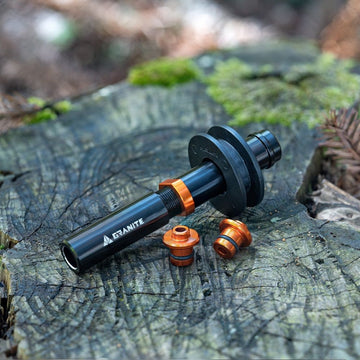
The tubeless plug kit is 35 g of machined AL6061 holding a steel reamer, a plug fork and ten plugs in two sizes. The chain tool is CNC-machined 7075, works with 9- to 12-speed chains, and has a slot for a spare quick link — which matters, because a chain tool without a quick link only gets you half a repair.
What you cannot put in there
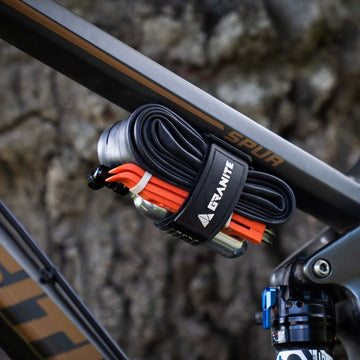
Being straight about the limits: a handlebar will not hold a spare tube, a pump, a CO2 canister and a multi-tool. It holds one slim tool per end. Anything bulky still needs a strap, a bottle cage pouch or a saddle roll.
What bar-end storage is good at is making sure the two fiddly, easily-forgotten items — the plug kit and the chain tool — are never the reason a ride ends early.
Handlebar or fork steerer?
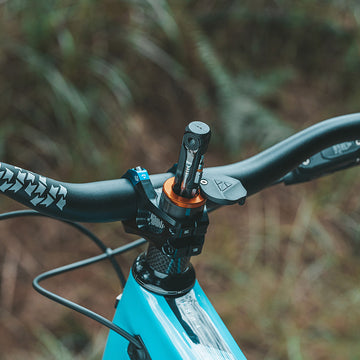
The steerer tube holds more, because it is longer and wider. The trade-off is installation: fitting a steerer tool means removing the star nut, which is a one-time job but not a roadside one.
Fork construction used to decide this. It no longer does: the RCX mounts on an expander that replaces the star nut, so it fits closed carbon road forks as well as forks with an opening at the bottom of the steerer. One kit covers both.
So the choice is about what you want in there, not what your fork will accept:
- A multi-tool — the RCX, at 110 g, with 2 to 6 mm hex, T25 and a flat-head, plus a spoke key with a Presta valve core remover built into it.
- A ratchet — the RT, at 159 g, giving up the folding multi-tool shape for a two-way mini ratchet, 92 mm long and rated to 20 Nm, with nine S2 steel bits.


A sensible split is a ratchet or multi-tool in the steerer for adjustments, and the plug kit and chain tool in the bars for failures. They do not compete for the same space.
Common questions
Does it rattle? A correctly tightened expansion fitting should not. If it does, the fitting is not expanded enough against the bar wall — it is a tightening problem, not a design one.
Does it weaken the handlebar? The tool sits inside the bar end, outboard of the clamp and well outside the highly stressed area near the stem. It adds clamping force to the bar wall, so follow the torque figure rather than going as tight as it will turn.
Can I move it between bikes? Bar-end tools, yes — they unscrew in seconds. Steerer tools, not really; the star nut is gone once it is out, so plan on one kit per fork.
Will it survive a crash? Bar ends take impacts. Machined alloy holds up better than plastic here, but nothing survives a bar being ground down on rock. Check the fitting after a hard hit on that side.


