

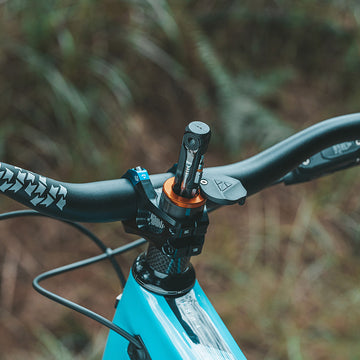
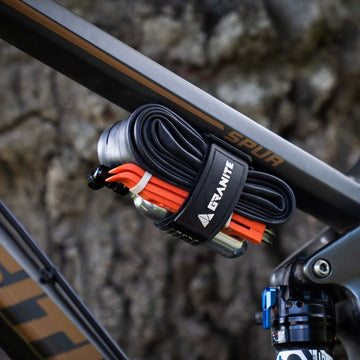


John Watson at The Radavist opened his look at the Rocknroll TQ with the observation that makes the whole category necessary:
Just about every product, from stems to seatposts, has specific torque specs.
Which is true, and mostly ignored. The figure is printed on the part. Almost nobody carries anything that can hit it.
The gap this fills
There are two normal states for a rider's toolkit:
- A full-size torque wrench in the workshop, used for the jobs you plan.
- A multi-tool in a pack, used for everything else — with no way to know how hard you are pulling.
Almost every adjustment happens in the second state: the saddle you dropped before a descent, the brake lever that rotated in a crash, the stem you reassembled after a flight. Those are the bolts most likely to be crushed, and they are exactly the ones a workshop wrench never sees.

What Rocknroll TQ covers
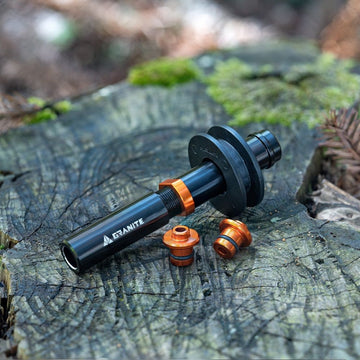
2–10 Nm, ±15%, with ten bits (2 / 2.5 / 3 / 4 / 5 / 6 / 8 mm hex, T20, T25, PH2), a reversible ratchet and an extension bar for awkward angles. 190 g complete.
That range is not arbitrary. It brackets the bolts riders touch: stem faceplates at 4–6 Nm, seatpost clamps at 4–6 Nm, bar-end mounts at 2–4 Nm, rear derailleur mounting bolts at 8–10 Nm. Saddle rail bolts at 12–15 Nm sit outside it — those stay a workshop job.


Read John's review
The Radavist's take is worth reading in full, particularly if you ride carbon and have ever tightened a clamp bolt by feel.
For the numbers themselves, our torque reference lists typical figures for cockpit, seatpost, brake and drivetrain bolts: the bike torque wrench guide.


