

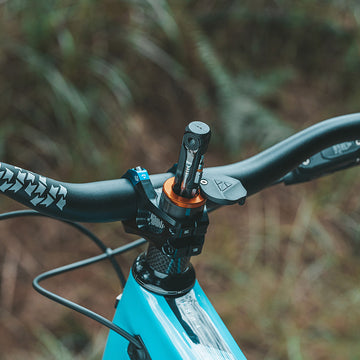
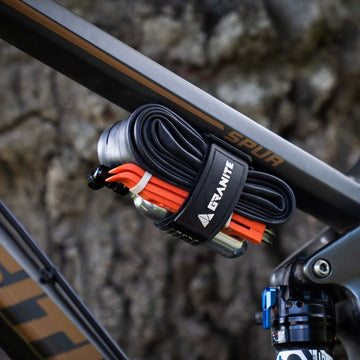

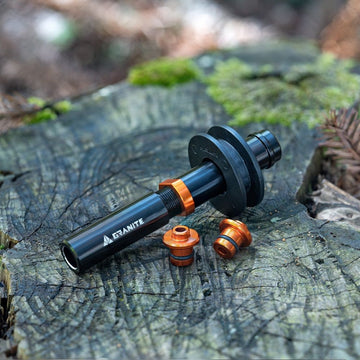

Pete Scullion spent a summer testing the Rocknroll TQ for Wideopenmag, which is the kind of review window that matters for a tool — a torque wrench either keeps its calibration and its place in your pack over a season, or it doesn't.
His verdict, in his words: a "solid, quality tool you'll always find room for".
What the review picked out
- Low weight. 190 g complete, in a 150 × 55 × 35 mm pouch — small enough that the decision to bring it stops being a decision.
- Solid construction. The thing a torque tool has to be, because a wrench that drifts is worse than no wrench: you tighten to a number that is not the number.
- Comprehensive bit selection. Ten bits — 2 / 2.5 / 3 / 4 / 5 / 6 / 8 mm hex, T20, T25, PH2 — so it is a complete tool rather than a torque handle you still have to feed bits into.
He frames it as an addition for big rides and multi-day trips, which matches where a portable torque wrench actually earns its weight: any ride where the cockpit gets reassembled away from a workshop.

Why an MTB torque wrench, specifically
Mountain bike cockpits are the parts most often adjusted at a trailhead and most often damaged by guesswork. Stem faceplates run 4–6 Nm, brake lever clamps 4–6 Nm, bar-end mounts as low as 2–4 Nm.
Those are numbers you cannot feel. The Rocknroll TQ's 2–10 Nm range (±15%) covers all of them, and the reversible ratchet means it loosens as well as tightens — which is what makes it a tool rather than a final-assembly gadget.


Read the full review
Pete's write-up on Wideopenmag has the long-term detail — a summer of use, in British conditions, on real bikes.
If you want the underlying numbers rather than the verdict, our own torque reference covers the typical figures for stems, seatposts, brakes and derailleurs, and which bolts fall outside a 2–10 Nm tool's range: the bike torque wrench guide.


